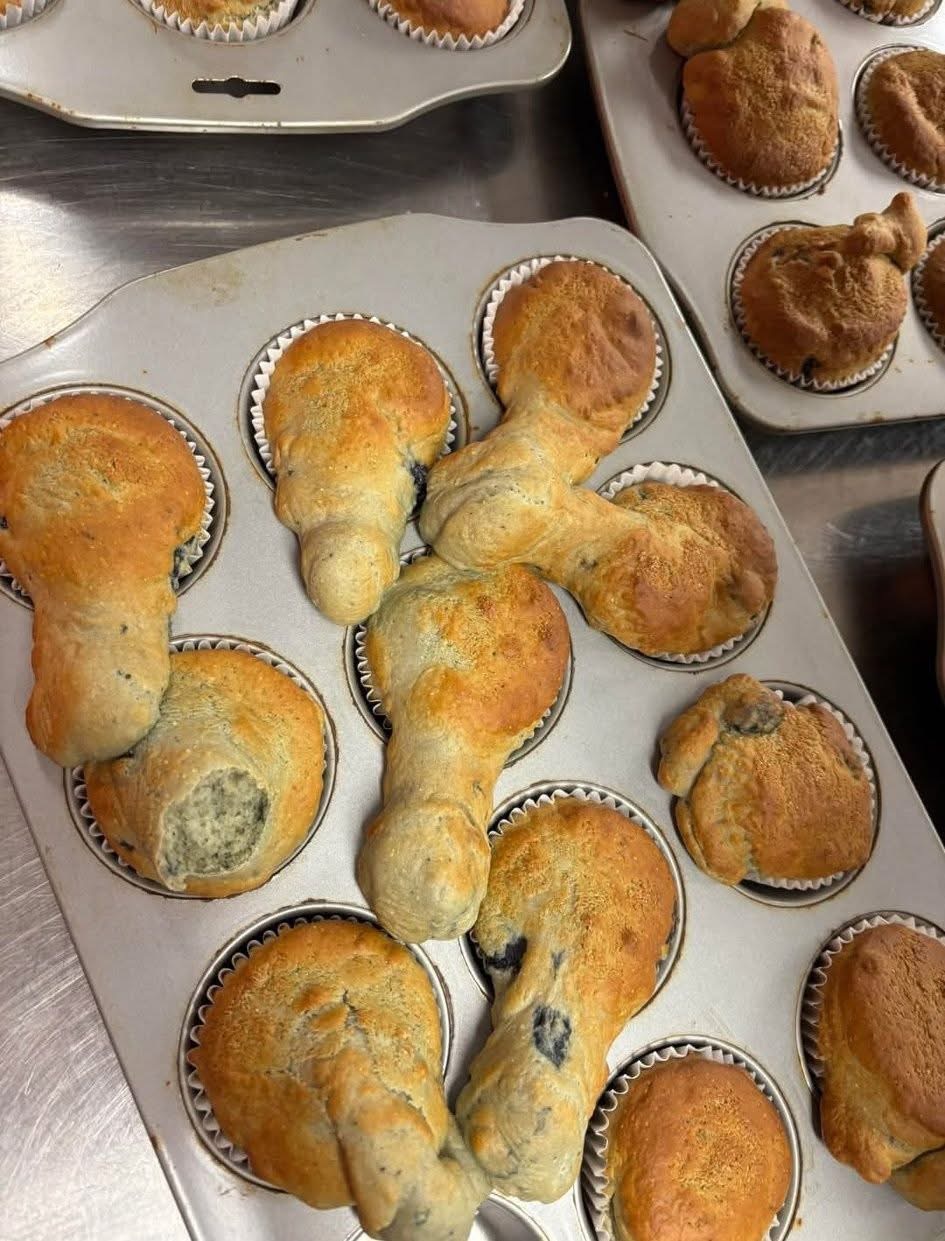
If your muffins bake up with long, uneven “tails” or spill out in one direction, the batter is rising too aggressively and/or the pan is heating unevenly. The result is a muffin that climbs out of the cup instead of doming evenly.
The Problem
• Muffins are overflowing and baking into strange shapes (like a tail or mushroom).
• Tops can look dry or overbrowned while the shape is distorted.
⸻
Most Common Causes
1) Too much leavening
Using too much baking powder or baking soda causes a rapid rise, pushing batter out of the liner.
2) Overfilled cups
Filling muffin liners past 2/3–3/4 full makes overflow likely.
3) Batter is too thick or lumpy in the wrong way
Very thick batter can “climb” up the liner and spill outward as it expands.
4) Oven temperature too high (or inaccurate)
If the oven is hotter than it should be, the outside sets quickly while the inside keeps expanding and forces a blowout.
5) Uneven heat / hot spots in the oven
Hot spots make some muffins rise faster than others and “lean” or burst to one side.
6) Old or wrong pan/liners
Thin or dark pans heat faster; liners that don’t fit well can also encourage overflow and odd shapes.
⸻
The Fix (What to do next time)
• Measure leavening carefully
A safe guideline for standard muffins is:
• 2 teaspoons baking powder per 2 cups flour, or
• ½ teaspoon baking soda per 2 cups flour (when there’s enough acid like yogurt/buttermilk/lemon).
• Fill only 2/3 full (3/4 max).
• Lower the oven temp slightly if needed (try 175°C / 350°F instead of higher).
• Rotate the pan halfway through baking to fight hot spots.
• Use the middle rack for the most even heat.
• Check your oven accuracy with an oven thermometer (many ovens run hot).
⸻
Prevention Tips (Best Practices)
• Don’t overmix: mix just until flour disappears—overmixing can create tough, uneven rise.
• Use room-temperature ingredients for smoother batter and better rise control.
• If you want tall domes (without tails), use the common bakery method:
• Start at 220°C / 425°F for 5 minutes, then reduce to 175°C / 350°F to finish.